Client project · Legal Tech
SoloSuit
Most people sued over debt never respond, and lose by default. This platform turns a court deadline into a guided flow anyone can complete.
$2.99BDebt Protected on Platform
At a glance
The engagement
- Client
- SoloSuit
- Industry
- Legal Tech
- Engagement
- Product build
- Stack
- Ruby on Rails, React, OpenAI, RAG
- Contribution
- Software engineering
- Status
- Shipped, in production
- $2.99BDebt Protected on Platform
- 393KPeople Helped
- 50US States Covered
- 3Products in the Suite
Before
Project context
When someone is sued over a debt, they have 14 to 30 days to file a formal response. Miss it and the court enters a default judgment — the case is lost without ever being argued. Most people miss it, because the alternative is hiring a lawyer they cannot afford or drafting a legal document they do not know how to write. SoloSuit closes that gap with software: a guided flow that compiles a valid response, generates the court documents, routes them to an attorney for review, and handles filing. ENGISOLS worked on the platform as an AI and senior software engineer.
The deadline is unforgiving and short — the flow has to take someone from panic to a filed response inside days, not weeks.
Users are non-lawyers under stress, often facing their first court document, so every step has to be legible without legal training.
Procedure and document requirements vary across all 50 states, and a response valid in one may be defective in another.
AI in a legal context cannot improvise. A hallucinated defence or citation is not a bad answer, it is a filing that fails.
The product must stay firmly on the correct side of a hard line: it provides legal information and document automation, never legal advice.
Debt settlement runs a different flow entirely — negotiation with creditors rather than court procedure — inside the same product.
What we built
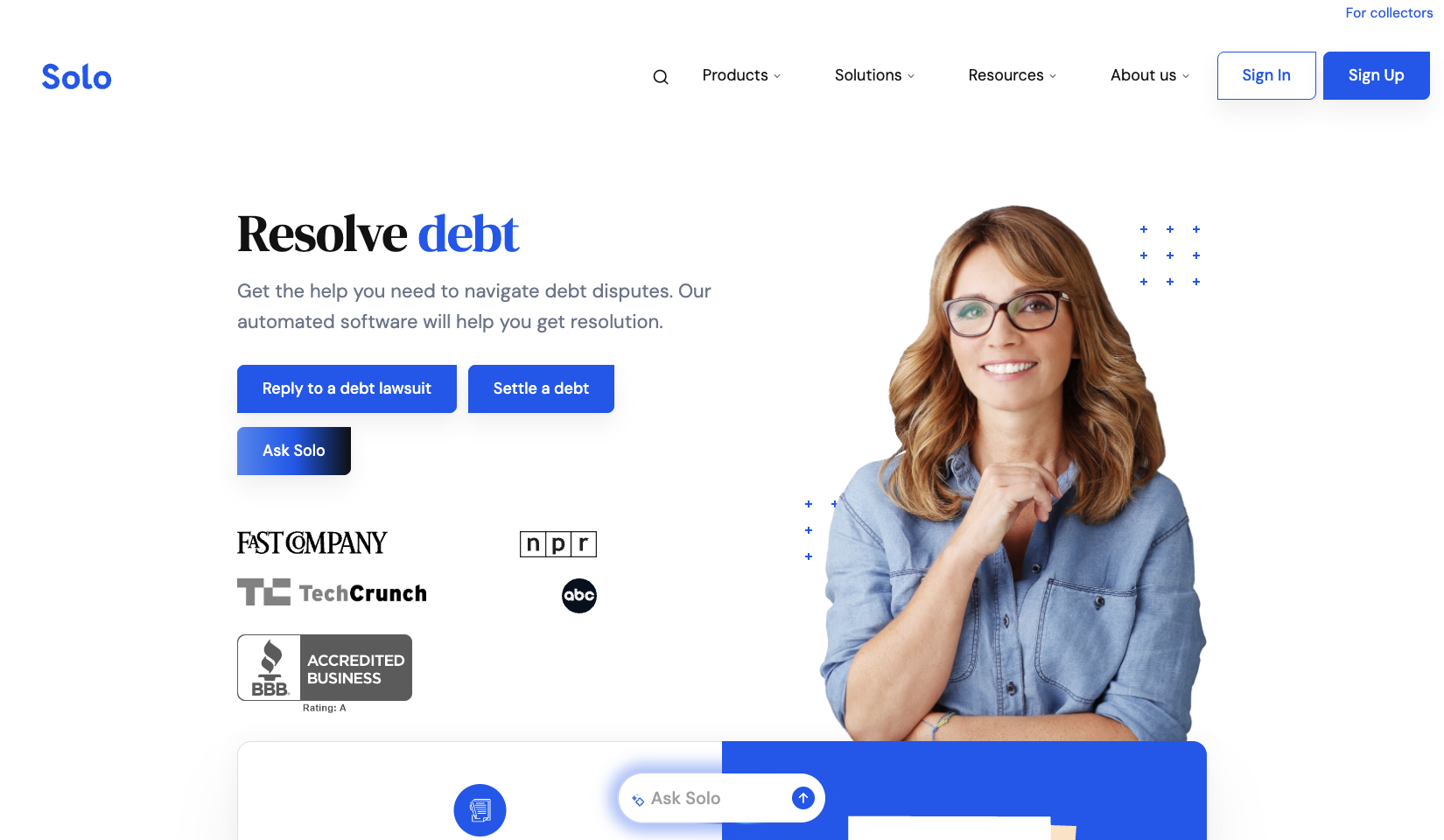
Legal AI that helps people answer debt lawsuits on their own — guided response flows, generated court documents, attorney review, and settlement tooling.
Technical decisions
Engineering decisions
Platform — Ruby on Rails + React
A Rails backend carrying case state, document generation, and the attorney review pipeline, with React front ends for the guided response flow. The step-by-step structure exists to break an intimidating legal document into questions a person can actually answer one at a time.
Legal AI — ChatGPT API Integration
AI assistance built on the ChatGPT API for legal and financial questions, integrated so it supports users inside the flow rather than sitting off to the side as a chatbot. Retrieval keeps responses anchored to real procedural information instead of generated guesses.
Agentic Workflows
Agent-driven workflows moving a case through its stages — intake, response compilation, document generation, attorney handoff, and filing — so the user experiences one continuous flow rather than a series of disconnected forms.
Document Generation
Court-ready documents assembled from user answers against the requirements of the relevant jurisdiction, then routed for attorney review before filing so a human signs off on what reaches the court.
Settlement Tooling
A parallel path for users who would rather settle than litigate, supporting negotiated payoffs below face value with the fee structure calculated against the settled amount.
Stack
- Ruby on Rails
- React
- OpenAI
- RAG
- AI Agents
Results
What changed
- A guided path to a filed lawsuit response for people who would otherwise default by doing nothing.
- Court-ready documents generated from plain-language answers, with attorney review before filing.
- Coverage across all 50 US states, each with its own procedural requirements.
- The platform reports $2.99B in debt protected across 393,000 people helped.
- Legal defence brought within reach of people priced out of hiring counsel.